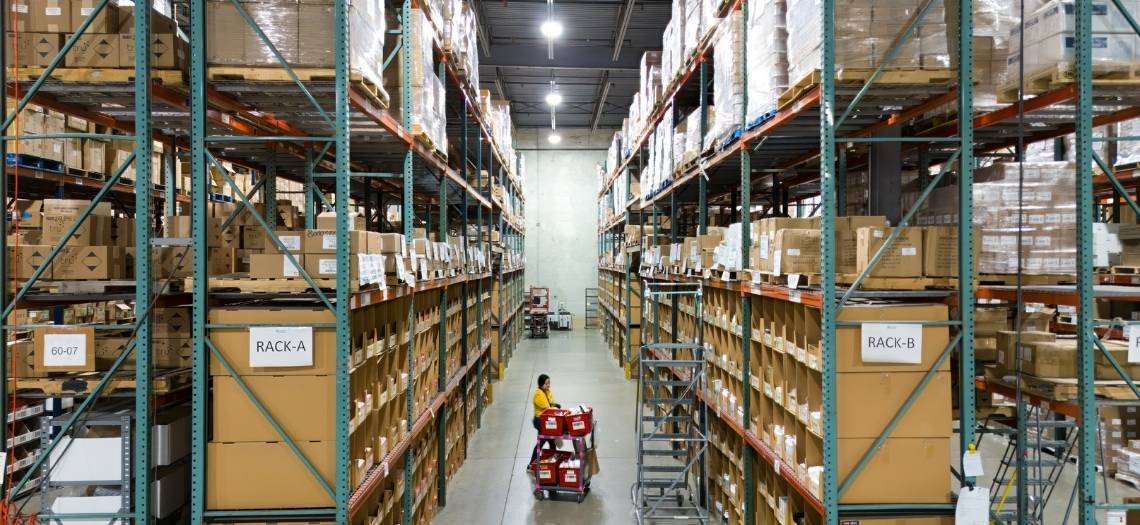

It usually starts with a spreadsheet. Customer notes live in one tab. Order issues live in another. Your support team is checking Shopify for order status while marketing is exporting email lists manually because the CRM is out of sync. Meanwhile, your warehouse is trying to process growing order volume without clear visibility into customer behavior, subscription activity, returns history, or wholesale relationships.
At first, it feels manageable. Then growth starts creating friction and the orders increase. With that customer expectations rise and more channels get added. Support tickets pile up during peak periods because nobody has a complete picture of what is happening across the business.
That is when choosing the best CRM for Shopify becomes less about sales and more about operational control.
A strong CRM does more than organize customer information. It helps you connect inventory visibility, customer communication, fulfillment workflows, and post purchase support into one scalable system.
The right setup reduces manual work, improves customer experience, and gives your team cleaner operational visibility as order volume grows.
Key Takeaways
Best CRM for Shopify Reduces Operational Friction
The right CRM helps connect customer data, inventory visibility, fulfillment workflows, and support systems so your team spends less time fixing issues manually.
Shopify Integration Quality Matters
Strong Shopify integrations support real time order syncing, accurate customer records, inventory awareness, and fulfillment visibility without creating operational gaps.
Inventory Visibility Supports Better Customer Experience
When CRM and warehouse systems stay aligned, teams can manage backorders, subscriptions, returns, and product launches more accurately.
Disconnected Systems Create Customer Problems
Delayed syncing between Shopify, CRM platforms, and fulfillment systems can lead to shipping errors, support delays, inventory oversells, and inconsistent communication.
MAI Fulfillment Helps Shopify Brands Scale
MAI Fulfillment supports Shopify integrations designed around inventory synchronization, order routing, pick and pack workflows, returns processing, and multi-channel fulfillment visibility..
Shopify CRM Integration
A Shopify CRM integration connects customer data, order information, fulfillment workflows, and inventory visibility across systems. When integrations work properly, teams can reduce manual work, improve customer communication, and scale operations more efficiently.
Why Shopify Brands Outgrow Basic Customer Tracking
Many Shopify brands start with lightweight tools because they work early on but once order volume increases, simple customer tracking stops being enough. Your team needs faster access to customer data, better automation, and clearer operational visibility across fulfillment, support, subscriptions, and returns.
Without that visibility, problems start compounding.
Common signs your CRM setup is creating operational drag include:
- Support teams manually checking Shopify orders
- Marketing lists that are outdated or segmented incorrectly
- Customer service teams missing shipping or return updates
- Wholesale and DTC customers managed in separate systems
- Subscription data disconnected from support workflows
- Manual exports between Shopify and other platforms
- No visibility into customer lifetime value or reorder behavior
When systems stop communicating properly, your team spends more time chasing information than improving throughput and that impacts the customer experience quickly.
Customers expect accurate order updates, fast responses, and consistency across every channel. If your CRM and fulfillment systems are disconnected, even small issues become expensive support problems.
What the Best CRM for Shopify Should Actually Do
The best CRM for Shopify is not necessarily the platform with the most features. It is the one that reduces operational friction while supporting how your business runs.
For ecommerce brands, that means the CRM needs to work cleanly alongside inventory management, order processing, fulfillment operations, and customer support.
A strong Shopify CRM should help you:
- Centralize customer and order data
- Automate customer communication
- Track purchase history and reorder behavior
- Segment customers based on buying activity
- Support subscription and loyalty workflows
- Sync cleanly with Shopify and fulfillment systems
- Improve customer response times
- Reduce manual reporting and exports
Most importantly, the CRM should support scalability without creating new operational bottlenecks.
HubSpot
HubSpot is often one of the strongest CRM options for growing Shopify brands because it combines customer management, automation, marketing, and support workflows inside one platform.
For brands scaling quickly, that operational visibility matters. Instead of jumping between disconnected systems, your team can track customer activity, support interactions, abandoned carts, email engagement, and lifecycle stages from one place and this creates cleaner workflows across departments.
HubSpot works especially well for brands that:
- Have both DTC and wholesale customers
- Run subscription models
- Need advanced segmentation
- Want stronger lifecycle marketing automation
- Need better customer support visibility
- Are scaling customer service operations
The biggest advantage is operational alignment. When your CRM, marketing automation, and fulfillment data stay connected, your team responds faster and makes better decisions with fewer manual processes.
Klaviyo
Klaviyo is often discussed alongside CRM platforms because of its strong Shopify integration and customer segmentation capabilities. It performs well for email and SMS retention workflows, but many brands eventually realize Klaviyo alone is not enough to manage broader operational workflows.
Marketing automation is only one piece of the system. If fulfillment updates are delayed or inventory visibility is inaccurate, even well-built customer flows start creating problems.
For example:
- Customers receive promotions for out-of-stock products
- Shipping updates arrive late
- Subscription timing falls out of sync with fulfillment
- Returns and exchanges create fragmented customer experiences
That is why ecommerce operations need more than strong marketing automation. The operational systems behind the customer experience still must function smoothly.
Salesforce
Salesforce is extremely powerful. But for many mid-market ecommerce brands, it introduces complexity faster than it creates operational efficiency.
Implementation timelines get longer. Customization costs increase. Teams often end up relying heavily on outside consultants just to maintain workflows and that creates operational dependency.
For large enterprise brands with dedicated technical teams, Salesforce can make sense. But many Shopify businesses need systems that move faster and stay easier to manage internally. The goal is not to build the most complicated tech stack possible. The goal is to improve customer experience while reducing operational friction. A CRM should simplify workflows, not create another layer of process management.
Inventory Visibility Matters More and most CRM conversations focus heavily on marketing. But for ecommerce brands, inventory visibility is often what determines whether the customer experience holds together.
If your CRM shows one thing while your warehouse systems show another, support teams lose trust in the data quickly. That creates slower response times and inconsistent communication.
Inventory visibility impacts:
- Backorder management
- Subscription forecasting
- Product launch coordination
- Customer support accuracy
- Return processing
- Wholesale allocation planning
- Multi-channel synchronization
When your CRM and fulfillment systems stay aligned, your operation becomes far easier to scale.
Customer Experience Breaks Down Quickly When Systems Do Not Communicate
Customers rarely care which CRM you use. They care whether orders arrive on time, support responds quickly, and communication stays accurate. When systems become disconnected, the customer experience starts breaking down quickly.
One delayed sync between Shopify, the CRM, and fulfillment operations can trigger a chain reaction across the business. Shipping notifications become inaccurate, support tickets get duplicated, refunds slow down, and inventory oversells become harder to control. Subscription shipments can fall out of sync and post purchase communication starts creating confusion instead of confidence.
Small operational disconnects become customer facing problems very quickly. That is why CRM decisions should never happen in isolation. Your CRM needs to work alongside fulfillment infrastructure, warehouse management systems, carrier routing, and inventory workflows.
Otherwise, your team ends up manually bridging the gaps between systems just to keep operations moving. That may work temporarily during lower order volume, but manual processes rarely survive scale.
Why Shopify Integration Quality Matters More Than Feature Count
Many CRM platforms advertise long feature lists, but feature count does not matter if the Shopify integration creates operational gaps.
A strong integration should support real time order syncing, accurate customer records, fulfillment status visibility, inventory awareness, returns tracking, subscription coordination, marketing segmentation accuracy, and multi channel order visibility. Without those connections working properly, your team starts spending more time fixing data issues than improving operations.
Weak integrations create hidden operational costs quickly. Teams end up exporting spreadsheets manually, correcting customer records by hand, or fixing support tickets that should have updated automatically across systems.
That slows down throughput across the business and creates unnecessary friction between customer service, marketing, and fulfillment operations.
The Best CRM for Shopify Depends on Operational Complexity
There is no universal answer. The best CRM for Shopify depends on how your business operates today and where operational pressure is increasing.
If your biggest challenge is retention marketing, your needs look different from a brand managing wholesale expansion, subscription growth, or rising support volume.
Before choosing a CRM, evaluate:
- Order volume growth
- Customer support complexity
- Subscription workflows
- Wholesale operations
- Inventory management needs
- Fulfillment visibility requirements
- Marketing automation goals
- Multi warehouse expansion plans
The right CRM should reduce operational stress, not increase system management.
That means choosing tools that work cleanly with Shopify and integrate properly into your fulfillment infrastructure.
How MAI Fulfillment Helps Shopify Brands Scale More Efficiently
As Shopify brands grow, fulfillment operations become tightly connected to customer experience. Faster shipping, accurate inventory visibility, cleaner order processing, and reliable communication all depend on systems working together without operational gaps.
At MAI Fulfillment, we work directly with Shopify brands to build fulfillment operations that support growth without creating unnecessary complexity. Our team helps integrate Shopify stores with fulfillment infrastructure so inventory, order flow, returns, and customer communication stay aligned as order volume increases.
That becomes especially important during peak season, product launches, subscription growth, and wholesale expansion. When systems stay connected properly, your team spends less time fixing operational issues and more time focusing on customer experience and growth.
We support Shopify integrations designed around real operational performance, including inventory synchronization, order routing, pick and pack workflows, returns processing, and multi-channel fulfillment visibility. That helps reduce manual work, improve throughput, and maintain operational accuracy even as volume scales.
For brands using CRM platforms like HubSpot, Klaviyo, or Salesforce alongside Shopify, fulfillment visibility becomes a critical part of the customer experience. We help ensure fulfillment operations support those systems cleanly, so customer data, shipping updates, and inventory visibility remain accurate across the business. The goal is not just faster fulfillment. It is building a more stable operational foundation that can support long term ecommerce growth without adding operational drag.
Choosing the Right CRM Is Really About Building a More Scalable Operation
The best CRM for Shopify is not simply the one with the biggest feature list. It is the platform that helps your team operate more efficiently while supporting the customer experience you are trying to deliver.
When your CRM, Shopify store, and fulfillment systems stay aligned, your operation becomes easier to scale without adding unnecessary complexity. That creates faster workflows, cleaner communication, stronger inventory visibility, and fewer operational bottlenecks.