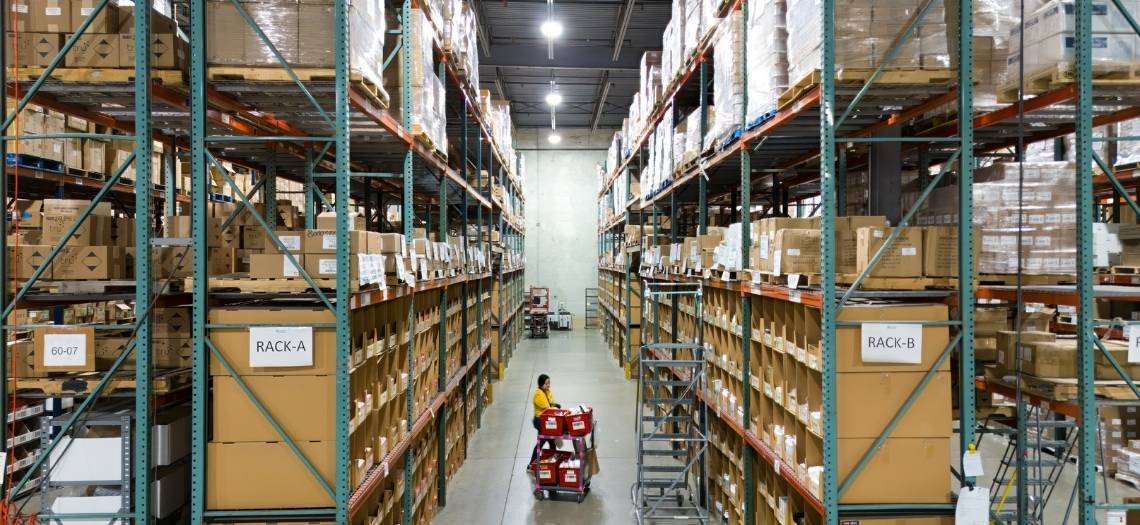
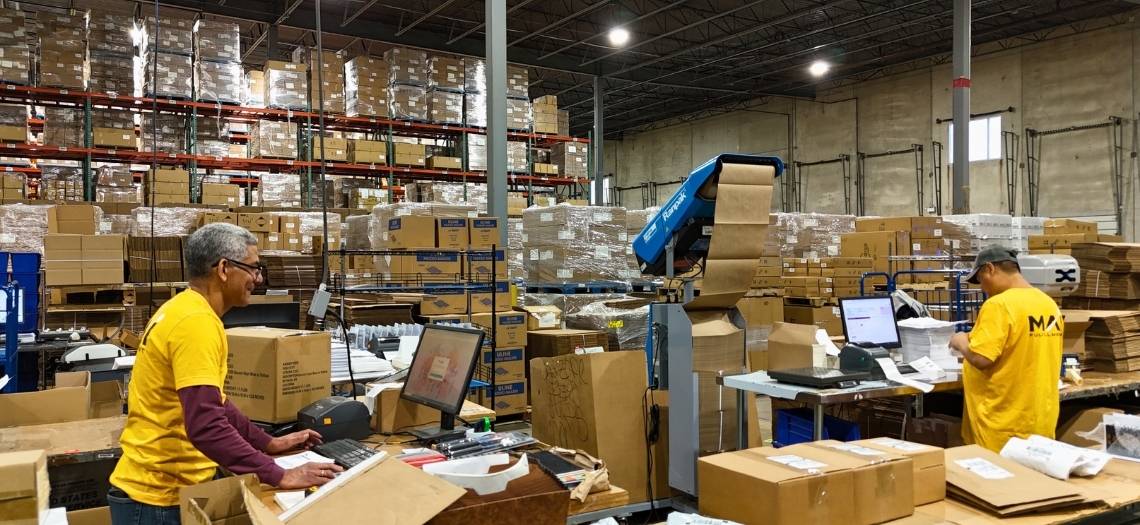
A 3PL (third-party logistics provider) is a company that manages logistics and fulfillment for your business. Instead of storing inventory and shipping orders yourself, a 3PL handles it for you.
This typically includes:
- Inventory storage
- Order fulfillment (pick, pack, ship)
- Shipping and carrier management
- Returns processing
For ecommerce brands, a 3PL is not just a warehouse. It is the system that connects your orders, inventory, and shipping into one operation that can scale.
Key Takeaways What Is a 3PL and Why It Matters
A 3PL (third-party logistics provider) handles storage, fulfillment, and shipping so you do not have to manage it in-house.
A strong 3PL fulfillment process improves shipping speed, order accuracy, and customer experience.
Brands typically move to a 3PL when order volume grows, operations get complex, or fulfillment starts slowing growth.
The right 3PL helps control costs and scale operations without adding internal overhead.
Not all 3PLs are the same. Technology, visibility, and operational support make the biggest difference.
What Does a 3PL Do? Core 3PL Services Explained
A 3PL handles the day-to-day work that keeps orders moving.
At a high level, that includes:
Inventory receiving
Your products arrive at the warehouse and are checked, counted, and stored.
Inventory management
Stock levels are tracked in real time so you know what is available across channels.
Order fulfillment
Orders are picked, packed, and prepared for shipment with accuracy checks in place.
Shipping and delivery
The 3PL selects carriers and service levels based on speed and cost.
Returns handling
Returned items are processed, inspected, and restocked when possible.
Each step directly affects speed, accuracy, and customer experience.
How Does a 3PL Work with Your Ecommerce Store?
A modern 3PL connects directly to your ecommerce platform.
When a customer places an order:
- The order flows into the 3PL system automatically
- The warehouse team picks and packs the items
- Shipping labels are generated based on the best carrier option
- The order ships with tracking sent to the customer
This process is powered by a warehouse management system (WMS) and integrations with platforms like Shopify.
The goal is simple: remove manual work and reduce errors while keeping orders moving fast.
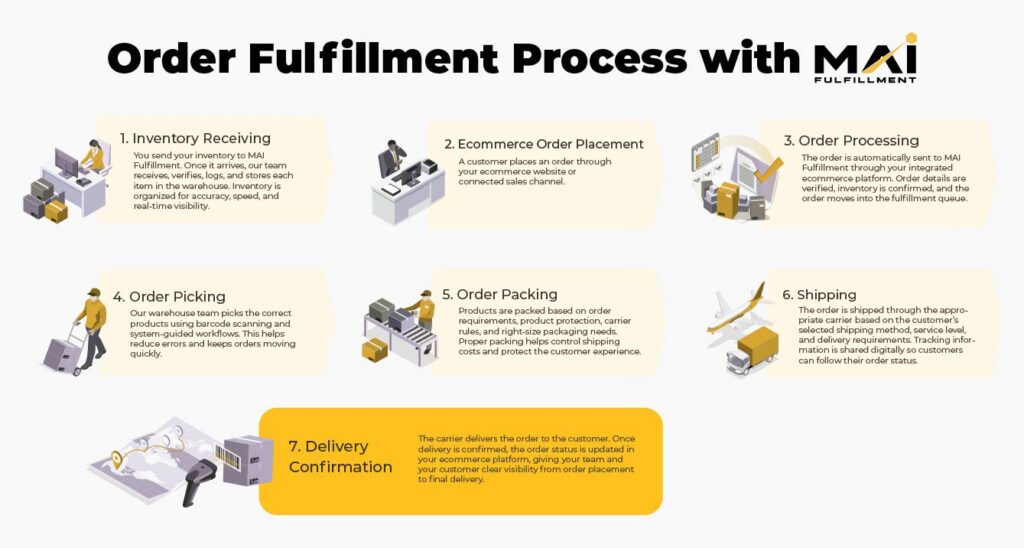
3PL Fulfillment Process Step by Step
Understanding the full 3PL fulfillment process helps you see where efficiency matters.
1. Inventory inbound: Products are received, inspected, and entered into the system.
2. Storage and organization: Items are stored in locations designed for fast picking.
3. Order sync: Orders flow in from your sales channels in real time.
4. Pick and pack: Items are scanned and verified before packing.
5. Shipping and routing: Carriers are selected based on cost, speed, and destination.
6. Tracking and delivery: Customers receive updates and delivery confirmation.
7. Returns processing: Returned items are handled and re-entered into inventory if sellable.
Every step is an opportunity to gain or lose efficiency.
Types of 3PL Services for Ecommerce and B2B Brands
Not all fulfillment is the same. The right 3PL services depend on how you sell.
DTC fulfillment: Direct-to-consumer shipping from your ecommerce store.
B2B fulfillment: Bulk shipments to retailers, distributors, or big-box partners.
Omnichannel fulfillment: Managing inventory and orders across multiple sales channels.
Subscription box fulfillment: Kitting and recurring shipments on a set schedule.
Kitting and bundling services: Combining multiple SKUs into one package for promotions, kits, or product bundles. This improves efficiency and helps increase average order value.
Amazon FBA prep services: Preparing inventory to meet Amazon’s FBA requirements, including labeling, poly bagging, bundling, and carton compliance to avoid delays or penalties.
Cross-docking and freight: Moving goods quickly without long-term storage.
Choosing the right mix matters for both cost control and customer experience.
Benefits of Using a 3PL for Fulfillment
The main reason brands move to a 3PL is to remove operational pressure. Key benefits include:
- Faster shipping-Better carrier options and optimized warehouse locations reduce transit time.
- Lower overhead-You avoid hiring, training, and managing warehouse staff.
- Scalability- Order volume can increase without breaking your operation.
- Improved accuracy- Systems and processes reduce picking and packing errors.
- Better customer experience- Reliable delivery builds trust and repeat purchases.
When Do You Need a 3PL?
Most brands reach a point where in-house fulfillment stops working. Common signs include:
- Order volume is growing or unpredictable
- Your team is spending too much time shipping orders
- You are running out of space
- Shipping costs are increasing
- Errors and delays are becoming more frequent
If fulfillment is slowing down your growth, it is time to consider a 3PL.
Signs Your Fulfillment Process Is Holding Your Business Back
Operational issues often show up before brands realize they need help. Here are several signs you need a new 3PL partner:
Inventory does not match what is actually available
If you are overselling, underselling, or constantly adjusting stock, you do not have real visibility.
Orders are shipping late or missing carrier cutoffs
Delays at the warehouse level create a ripple effect that impacts delivery times and customer expectations.
Manual processes are still driving your operation
If your team is relying on spreadsheets, manual order entry, or workarounds, the system will not scale with growth.
You are spending too much time on fulfillment
If leadership or core team members are pulled into daily shipping issues, it is taking focus away from growth.
Shipping costs keep increasing without a clear reason
Lack of optimization around packaging, zones, or carrier selection leads to margin loss.
Error rates are increasing as volume grows
More orders should not mean more mistakes. If it does, your process is not built to scale.
Returns are hard to track or manage
Without a clear returns process, you lose inventory, visibility, and control over the customer experience.
You cannot support new sales channels easily
Adding wholesale, marketplaces, or new platforms should not require rebuilding your operation.
Peak season feels like a risk instead of an opportunity
If higher order volume creates stress instead of confidence, your infrastructure is not ready.
You lack real-time visibility into orders and inventory
If you cannot quickly answer “what is in stock” or “where is this order,” you are operating with blind spots.
These problems lead to refunds, customer complaints, and lost repeat business.
How Much Does a 3PL Cost?
One of the most common questions is 3PL pricing.
Costs typically include:
- Storage fees (based on space used)
- Pick and pack fees (per order)
- Shipping costs (carrier rates)
- Receiving fees (for inbound inventory)
What impacts cost the most:
- Order volume
- Product size and weight
- Number of SKUs
- Shipping zones
The lowest price is not always the best option. Poor fulfillment creates hidden costs through errors, delays, and lost customers.
What to Look for in a 3PL Company
Choosing the right partner matters more than the price. Focus on:
Technology and integrations: Real-time visibility and seamless platform connections.
Location and shipping reach: Ability to reduce zones and improve delivery speed while also keeping costs down by not having your inventory spread too thin across too many warehouses
Pricing transparency: Clear, predictable costs without surprises.
Operational support: A team that can handle complexity and growth.
Scalability: Capacity to support peak seasons and expansion.
Questions to Ask a 3PL Before You Sign
Before choosing a provider, use this checklist to ask:
- How do you handle peak season volume?
- What systems and integrations do you support?
- What are your accuracy and shipping SLAs?
- How do you reduce fulfillment errors?
- What visibility will I have into inventory and orders?
Common 3PL Mistakes to Avoid
Many brands choose the wrong partner for the wrong reasons.
Avoid:
- Choosing based on price alone
- Ignoring technology capabilities
- Not planning for growth
- Overlooking returns management
These mistakes create more problems than they solve.
3PL vs In-House Fulfillment: Which Is Better?
There is no one answer, but there is a clear tipping point.
In-house fulfillment works when:
- Order volume is low
- Operations are simple
A 3PL makes sense when:
- You need to scale
- You want faster shipping
- You are expanding channels
The decision comes down to control versus efficiency and growth.
How MAI Fulfillment’s 3PL Process Is Different
Not all 3PLs operate the same way.
At MAI Fulfillment, the focus is on performance and scalability:
- Real-time inventory and order visibility
- Integrated systems that reduce manual work
- In-warehouse teams focused on accuracy
- Processes designed to support both DTC and B2B
This results in fewer errors, faster shipping, and a more consistent customer experience.
Why Brands Choose MAI Fulfillment as Their 3PL Partner
MAI Fulfillment customer data shows that adding an additional sales channel helped brands increase sales by an average of 32%.
Most 3PLs can store inventory and ship orders. The difference shows up in how the operation adapts to your business and performs as you grow.
At MAI Fulfillment, the process is built to support your workflows, not force you into someone else’s system.
A flexible WMS that adapts to your operation
Many 3PLs require you to change how you work to fit their system. MAI uses a warehouse management system (WMS) that supports custom integrations, so your existing platforms, workflows, and data structure can stay intact.
That means less disruption, faster onboarding, and a setup that fits how your business already runs.
Custom integrations that connect your entire ecosystem
Whether you are managing ecommerce, retail, or multiple systems, integrations are built to keep everything in sync. Orders, inventory, and updates flow automatically without manual workarounds.
Real-time visibility across inventory and orders
You are not guessing what is in stock or where an order stands. Data is updated in real time across channels, giving you a clear view of your operation at any moment.
Accuracy built into every step of fulfillment
From receiving to picking to packing, verification checkpoints are built into the process. This reduces errors, incorrect shipments, and avoidable returns.
Shipping decisions that balance speed and cost
Carrier selection is dynamic based on destination and service level. This helps maintain delivery expectations while controlling shipping spend.
Support for DTC, B2B, and omnichannel fulfillment
As your business grows, your fulfillment needs become more complex. MAI supports direct-to-consumer, retail, and multi-channel operations within one system.
Kitting, bundling, and Amazon FBA prep built into the workflow
Value-added services are handled within the same operation, so you are not managing multiple vendors or disconnected processes.
Scalable infrastructure designed for growth and peak volume
Your operation should not break during high-volume periods. MAI is structured to handle spikes without sacrificing speed or accuracy.
In-warehouse teams focused on execution
Your fulfillment is handled by a dedicated team accountable for performance, not passed between disconnected groups.
The future of fulfillment is not just automation or AI. Those tools are critical, but they create the most value when they are paired with the flexibility to fit how each customer actually operates. This combination is what allows us to adapt to each customers workflows, data and growth path.
Brian Olson
Why This Matters for Your Business
- Faster onboarding without rebuilding your workflows
- Fewer manual processes and errors
- Real-time operational visibility
- More flexibility as your business evolves
- A fulfillment setup that supports growth instead of slowing it down
Key Questions About 3PL Fulfillment
What is the difference between 3PL and 4PL?
How long does it take to onboard with a 3PL?
Most onboarding timelines range from a few weeks to a couple of months, depending on complexity. This is where MAI is different, onboarding can happen in as little as 48 hours after receiving your products.
Can a 3PL handle international shipping?
How do returns work with a 3PL?
Fulfillment Is a Growth Driver
Fulfillment is no longer just a backend function. It affects shipping speed, customer satisfaction, and your ability to scale. The right 3PL does more than ship orders. It helps you operate with fewer errors, better visibility, and more control over growth.
If your current setup is starting to slow you down, it may be time to rethink how fulfillment fits into your business.
Partner with MAI Fulfillment to turn your operations into a system that supports growth, not one that limits it.
Fix your fulfillment gaps now
Build systems that scale with demand
Stay fast when volume returns