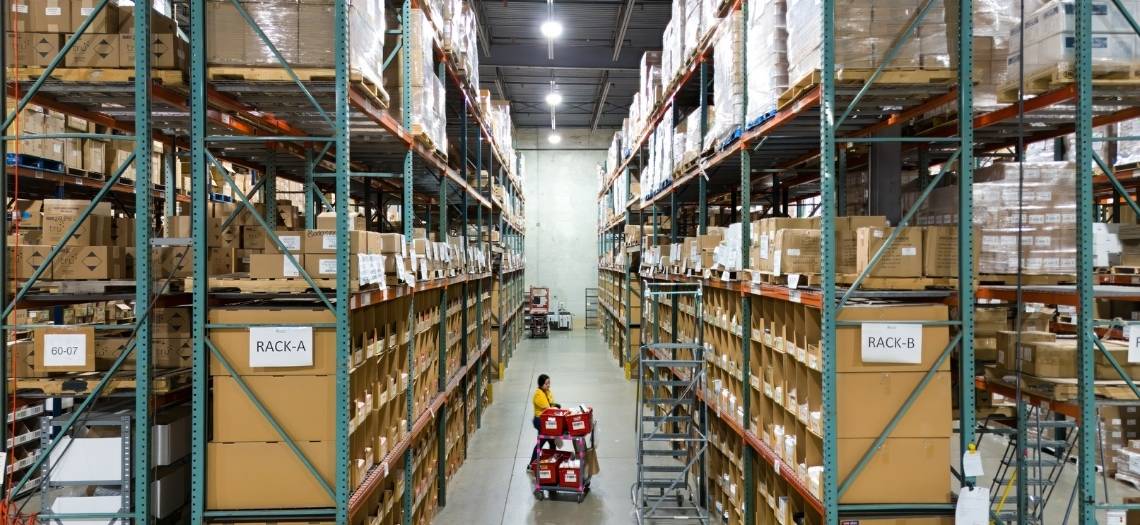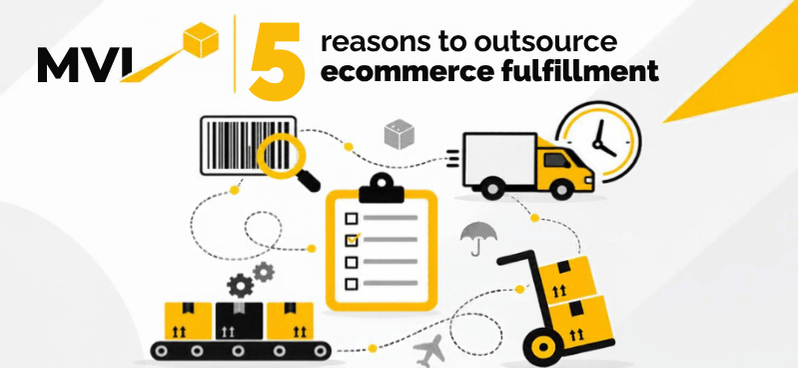
At first, handling fulfillment yourself can make sense. Orders are manageable. Inventory fits the space you have. Your team can pick, pack, and ship without fulfillment taking over the day.
Growth changes the math.
When more orders, SKUs, sales channels, returns, and customer expectations start putting pressure on your operation, it may be time to outsource ecommerce fulfillment. The goal is not simply to stop packing boxes. It is to build a fulfillment operation that can support growth without requiring your company to become a warehouse operator.
U.S. ecommerce sales reached $1.23 trillion in 2025, according to the U.S. Census Bureau. Ecommerce represented 16.4% of total U.S. retail sales. That volume continues to put more pressure on the operations behind every online order.
Key Takeaways
Outsource Ecommerce Fulfillment to Protect Your Team's Time
Moving daily warehouse work to a fulfillment partner gives your team more time to focus on products, customers, marketing, and growth.
Fulfillment Costs Go Beyond Pick and Pack
Running fulfillment in-house also requires labor, space, management, technology, equipment, packaging, and capacity for busy periods.
Scalable Fulfillment Helps You Handle Demand Changes
The right 3PL can support promotions, peak seasons, product launches, and channel growth without forcing you to build permanent warehouse capacity around your busiest month.
Fulfillment Directly Affects Customer Experience
Inventory accuracy, processing time, shipping options, and returns all shape what happens after your customer clicks buy.
The Right 3PL Should Improve Visibility, Not Reduce It
Strong integrations and reporting let you outsource warehouse execution while maintaining visibility into inventory and orders.
Outsourcing Ecommerce Fulfillment
Outsourcing ecommerce fulfillment means using a third-party logistics provider to manage warehouse operations such as receiving inventory, storage, picking, packing, shipping, and often returns. Your brand continues to own the customer relationship while the 3PL manages the physical fulfillment work.
What Does It Mean to Outsource Ecommerce Fulfillment?
Outsourced ecommerce fulfillment moves the physical work of storing inventory and processing orders to a fulfillment partner. Instead of leasing and operating warehouse space yourself, you use a 3PL’s people, systems, processes, and infrastructure.
Outsourced ecommerce fulfillment is a model in which a third-party logistics provider manages some or all of a brand’s warehousing and order fulfillment operations.
That can include receiving inventory, storage, inventory management, pick and pack, shipping, returns, kitting, and other value-added services.
The details matter. A strong relationship does not mean handing over your inventory and hoping for the best. Your store, ERP, marketplace, or other systems should connect with the fulfillment operation so orders and inventory data can move accurately between both businesses.
When Should You Outsource Ecommerce Fulfillment?
There is no universal monthly order number that tells you when to outsource. You should start evaluating the decision when fulfillment is restricting growth, creating avoidable costs, or becoming harder to manage consistently.
Look beyond order count.
Warning signs can include running short on warehouse space, struggling to staff busy periods, spending too much management time on fulfillment, experiencing inventory discrepancies, or avoiding promotions because you are worried the warehouse cannot handle them.
Complexity matters too. A brand shipping simple single-SKU orders may manage significant volume internally. Another company with bundles, subscriptions, retail orders, returns, or multiple channels can reach its operational limit much sooner.

1. Outsourcing Gives Your Team More Time for Growth
Fulfillment becomes expensive when the wrong people spend their time managing it. Every hour your leadership, customer service, or ecommerce team spends solving warehouse problems is time they cannot spend improving the business.
The issue goes beyond packing orders.
Someone also has to manage staffing, inventory questions, receiving schedules, packaging supplies, carrier issues, warehouse systems, returns, and daily exceptions.
That operational labor has a real cost. The U.S. Bureau of Labor Statistics reported average hourly earnings of about $26.74 for warehousing and storage employees in August 2026. Transportation, storage, and distribution managers had a 2025 median annual wage of $99,330 within the warehousing and storage industry.
Outsourcing shifts much of that day-to-day operational responsibility to a team built to manage it.
That gives your people room to work on the things only your company can do. Product development. Marketing. Retail growth. Customer acquisition. Merchandising. New channels.
Those are difficult to scale when your internal team is constantly pulled back into warehouse problems.
2. Outsourcing Can Give You More Control Over Fulfillment Costs
Outsourcing does not automatically make every order cheaper. It can, however, replace several warehouse expenses with a clearer operating model that changes with your actual fulfillment needs.
Fulfillment cost is the total cost required to receive, store, process, pack, ship, and manage an order, not simply the postage or pick fee and that distinction matters.
When comparing in-house and outsourced fulfillment, account for costs such as warehouse space, warehouse labor, supervision, equipment, software, packaging, insurance, training, overtime, temporary peak labor, and carrier expenses.
Then add the cost of mistakes.
Inventory discrepancies, incorrect orders, inefficient packaging, missed shipping cutoffs, and poorly managed returns all carry a cost even when they do not appear neatly on a fulfillment invoice.
Does Outsourcing Fulfillment Save Money?
It can, but cost should be evaluated against your entire operation rather than one 3PL fee. A growing company may benefit from sharing warehouse infrastructure, labor, systems, and shipping volume rather than building each capability independently.
This becomes particularly useful when demand changes throughout the year.
Owning enough space and labor for your busiest month can leave you paying for unused capacity during slower periods. Building only for average volume creates the opposite problem when a promotion or peak season arrives.
The better comparison is total cost per order plus the infrastructure and management required to support it.
3. You Can Scale Without Rebuilding Your Warehouse Operation
How Does a 3PL Handle Seasonal Demand?
A capable 3PL plans labor, warehouse capacity, workflows, inventory, and carrier requirements around changing order volume. That reduces the need for your company to hire, train, schedule, and manage temporary warehouse resources every time demand changes.
This is especially valuable when growth adds complexity along with volume.
Selling DTC is one workflow. Add wholesale orders, retail routing requirements, marketplace fulfillment, subscriptions, or kitting and the operation changes quickly.
Your fulfillment partner needs to scale with both.
4. Stronger Fulfillment Can Improve the Customer Experience
5. Outsourcing Gives You Access to Systems and Operational Expertise
A strong fulfillment partner brings more than warehouse space. It should give you processes and technology that make inventory and orders easier to manage as your business grows.
That starts with visibility.
Your team should be able to see inventory, order status, shipment activity, returns, and the information needed to make operating decisions.
Integrations matter for the same reason. Orders should move from your ecommerce and business systems into the warehouse without relying on repeated manual entry.
Better systems can also support inventory controls, reporting, order routing, carrier selection, kitting, retail compliance, and other workflows that become difficult to manage through spreadsheets and disconnected tools.
Do You Lose Control When You Outsource Fulfillment?
You should give up warehouse workload, not operational visibility. The right technology and service structure should let you see what is happening while your fulfillment partner manages execution.
That is the difference between outsourcing and operating blind.
Before choosing a 3PL, understand how inventory updates, how exceptions are reported, how performance is measured, who handles problems, and what your team can see without requesting a manual report.
What Should You Compare Before Outsourcing Ecommerce Fulfillment?
Choose a fulfillment provider based on how well its operation fits yours, not simply which company quotes the lowest pick fee. Your product, channels, order profile, customer expectations, and growth plan should drive the decision.
Before moving inventory, evaluate areas such as:
- integrations with the systems and channels you use
- inventory visibility and reporting
- order processing requirements
- pick and pack workflows
- shipping options and carrier strategy
- returns capabilities
- kitting, bundling, or custom packaging needs
- retail or B2B requirements
- capacity for promotions and peak periods
- pricing structure and additional fees
- service expectations and accountability
Ask what happens when something does not follow the standard workflow too.
Growing brands have exceptions. A fulfillment partner’s ability to deal with those exceptions often tells you more than its ability to process an ordinary order.
Make Fulfillment Support the Business You Are Building
The best time to outsource ecommerce fulfillment is not tied to one magic order volume. It is when running fulfillment internally starts consuming resources, limiting flexibility, or making growth harder than it needs to be.
A strong 3PL gives you operational capacity without requiring you to build every warehouse capability yourself. More importantly, it gives your team room to focus on the parts of the business that create demand while fulfillment is equipped to handle what comes next.
With MAI, fulfillment is built around your channels, inventory, workflows, and growth plans rather than forcing your business into a rigid operating model.
Outsourcing E-commerce Fulfillment FAQs
Yes. Many fulfillment programs can incorporate approved branded boxes, inserts, packaging materials, or other packing instructions. The provider should document those requirements and confirm how materials will be stored, replenished, and used.
Yes. Fulfillment and customer service can remain separate functions, with your internal support team using order and tracking data from the fulfillment system. Clear system access and exception communication are important when different teams manage the two functions.