Focus on high-margin products while eliminating low-margin products
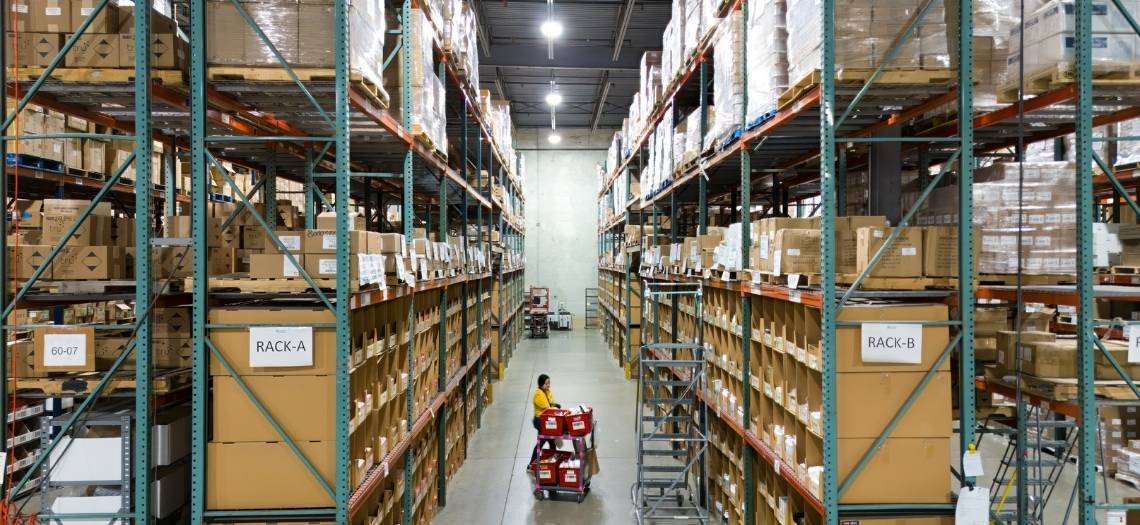
During high economic expansion periods, a supply chain is expected to treat every product — those with high-margin and low-margin – with equal importance. However, during recessionary periods, low-margin products can become deadweights that pull down financial stability.
As a pre-emptive measure, businesses should make a list of low-margin products which could have lower demand during a recessionary period. An SOP for removing them from the supply chain’s activities should be created. This will help buffer high-margin products without driving the costs up. As a result, the supply chain can better insulate itself from the downturn of the recession to a certain extent.
Integrate future contracts and risk-sharing into carrier contracts
Carriers and supply chains are like chains and cogs of machinery. The system breaks down if one of them is not in alignment with the other. During the recession, both the parties would be at a loss since revenues will plummet while costs keep spiraling upwards.
In such a situation, an ideal way to stay recession-proof would be through future contracts. Future contracts are contracts dated for a future period. The costs are tricky to calculate and might require the help of a financial planner. However, a future contract ensures both the business and the carrier can operate at an optimal rate that is beneficial for both or, at least, at a cost that does not incur losses for both the parties.
There is another benefit of integrating future contracts for transportation. It provides more clarity on supplier costs. As a result, it becomes easier to share the risk that both sides have to go through during recessionary times.
Bank on automation for cost-reduction
Run surprise checks
Automation makes it possible to integrate several siloed systems that work independently within the supply chain. For example, if demand management is tied to inventory management and purchases, unnecessary purchases that incur supply chain resources can be avoided. Since automation is the future of the supply chain, businesses should start planning for it when the economic climate is good rather than wait for a downturn to stall all business transformation activities.
According to IBM, over the next three years, 79 percent of consumer product manufacturers and 85 percent of retailers are expected to switch to this automation. This rate is said to be high in the Nordic regions where the need for a smart supply chain is high.
Final thoughts on how the supply chain can tide over the recession
If you look at the economic history in the U.S., it has undergone 14 recessions since the Great Depression in 1929. Since 1945, the average recession lasts close to 10 months. Whether we will face a recession soon is a question for the economists, but it is always the right time to plan for staying strong during recessionary times.
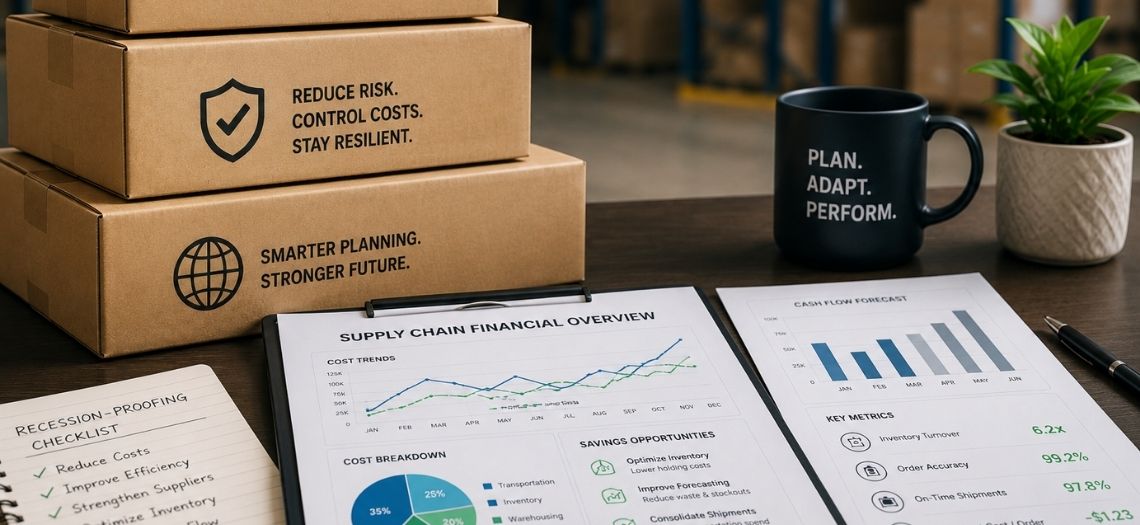
The tightening process begins with identifying low-margin products that could become deadweights during recessionary periods. Further, future contracts with carriers to tide over the recession periods can also be negotiated. In the end, there is also automation. All of these pre-emptive measures can help a business recession-proof its supply chain.
To know more about MAI’s expertise in contact center and fulfillment services, please give us a call.
Fix your fulfillment gaps now
Build systems that scale with demand
Stay fast when volume returns